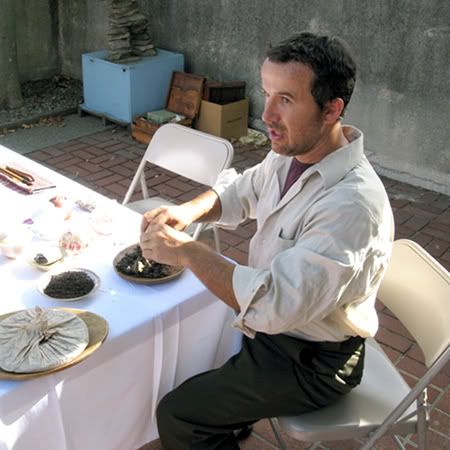
 (Brian S. Kirbis, the researcher - host of the event. Photo by Will Yardley, posted with permission.)
Blogs that have chronicled the event:
Tea Nerd -- by Brent Hughes
...still awaiting for Jason's version of the day in his blog.
(Brian S. Kirbis, the researcher - host of the event. Photo by Will Yardley, posted with permission.)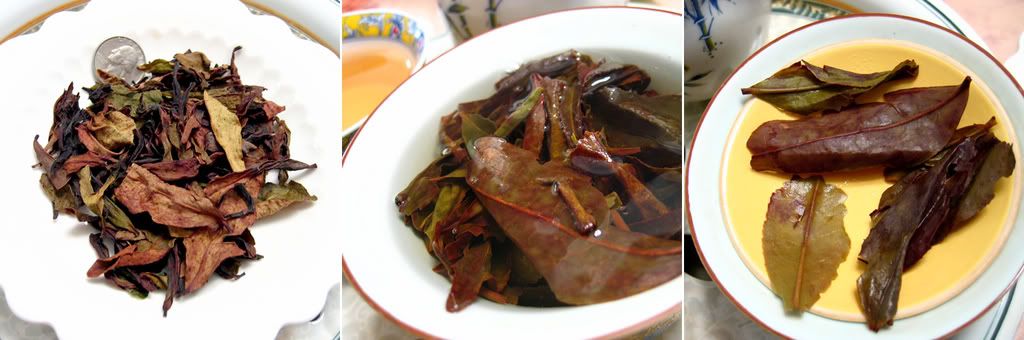 This tea yields a medium-yellow to light-orange liquor color, depending on the water temperature and steeping time. The aromatics is subtle and pleasant when brewed carefully, which reminded me of various yellow fruits (peach, mango, pineapple). It's also a touch floral and honey-like in the nose. All these pleasant aromas can become overwhelmingly concentrated, however, when the tea is over brewed, though it hardly ever gets bitter.
 The heat today during the daytime was incapacitating. The digital thermometer inside my car clocked in at 113' F (45' C)! As I'm writing this (11pm), the weather.com has my area at 91'F (33' C). Too much of a good thing.... And there is going to be more of it since today is the first official day of summer season for Southern California.
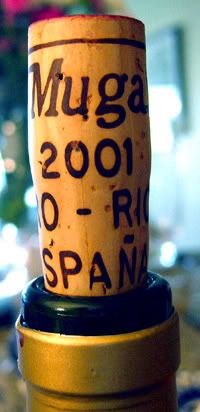 Purchased when released (~2004, $21). Cellared at constant 57' F (offsite).
 My stomach and sides have been hurting lately. It's from laughing too much, thanks to David Sedaris and his new book "When You Are Engulfed in Flames". I'm still reading it...and enjoying it tremendously.
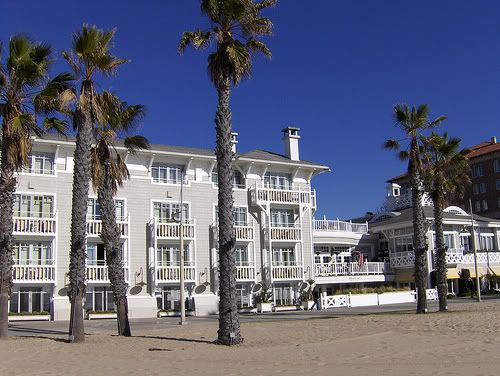 Had a pleasant lunch today with a couple of friends at the Coast, one of the restaurants inside the charming Shutters on the Beach Hotel in Santa Monica. The weather was perfect! I ordered the fish and chips, probably because I've been rambling about everything British ad nauseam in my previous post. Since we had to return to our respective offices rather shortly, we didn't drink any alcohol.
 My wife and I were at the Patina restaurant again at the Frank Gehry-designed Walt Disney Concert Hall, and we were reasonably disappointed with the wine selections and the cheese service. (Patina was awarded Michelin 1-star and it is a member of Relais & Châteaux).
I wonder what positive and/or negative impact this movie will bring to the California wine industry (and French's, too, for that matter). The last time Hollywood came up with "Sideways", that movie did two great things: it placed Pinot Noir and Santa Barbara wine country in the conscious mind of the general public, and it helped push Merlot out of trend (thanks to Miles' opinion of it).
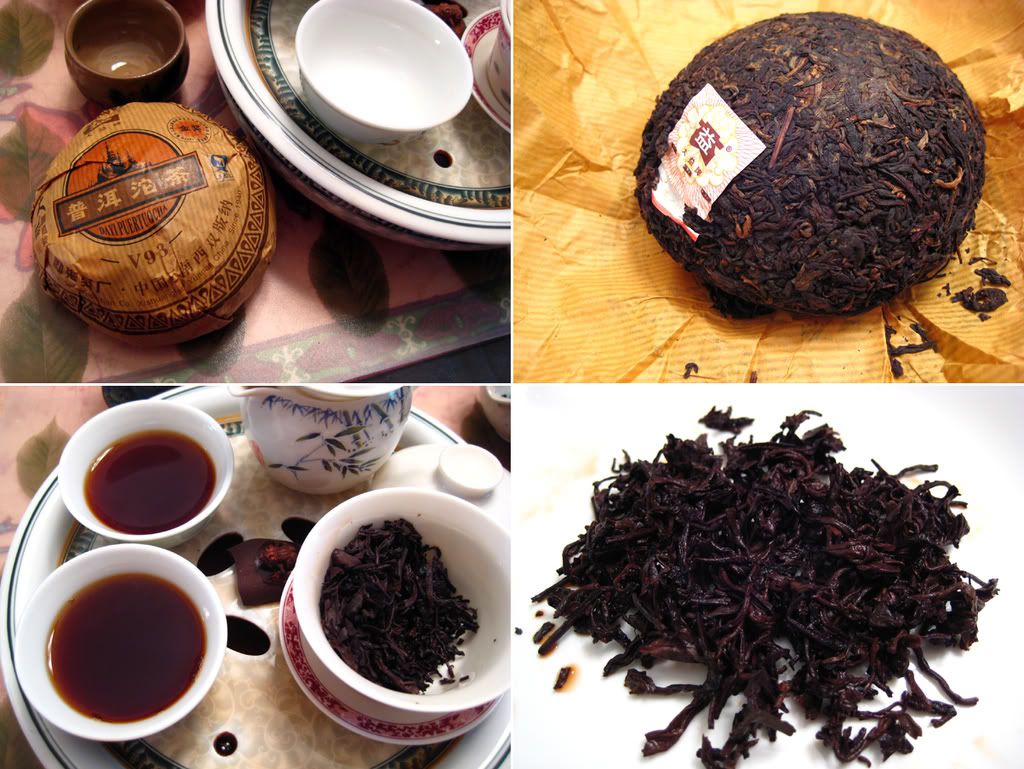
So I brewed that last 10gr of the 2005 V93 after I had had enough of the disgusting sludge. The difference was nectar compared to, well, mud! The 2005 was woody, fresh, clean, creamy and had a slightly sweet aftertaste (huigan). I kept brewing it until all that was left was thinly colored water. I enjoyed every infusion that I could get out of it. The smell of the wet leaves reminded me of root-beer, as it did last year. My stomach felt soothed and cooled, and my mouth was rid of any bad taste.
So what is wrong with the 2006 V93? Is it only with batch # 602? Will time transform it into a swan? I have a sinking feeling that it's crap and forevermore will be so.
I wonder where I can get more of the 2005 vintage from.
Unexpectedly, however, this old tea was highly astringent. I asked if astringency (rough, pucker-y texture in the mouth and on the tongue) is commonly found in aged oolongs. Apparently, yes. I have always assumed that the older a tea gets, the smoother it should be. My expectation for a silky-smooth mouthfeel was clearly misplaced. This was an education for me.
The Wuyi Gu Shu Cha was decidedly delicious, although unfortunately, I had to leave the party after the second or third brew in order to tend to my daughter, who suddenly developed a fever. This is a tea brought over by Will and Louise from their trip to Wuyi Shan, China, last year. This sample was sourced from a vendor whose teas Corax (of Chadao blog) was so impressed with during his visit to the same locale (click here to read Corax's account of meeting the vendor, Ms. Yu). By the time I had to leave, we had (only) been drinking for about three and a half hours.
Also worth noting was the use of a certain mineral (volcanic?) rocks placed in the fairness cup. Danica and Will swore by the rocks' potent contribution in softening the water, and thus the tea. MarshalN was skeptical at first, but later on admitted to a certain softening of the old oolong he was brewing when the rocks were involved. I remain largely a skeptic, but willing to be open minded about it.
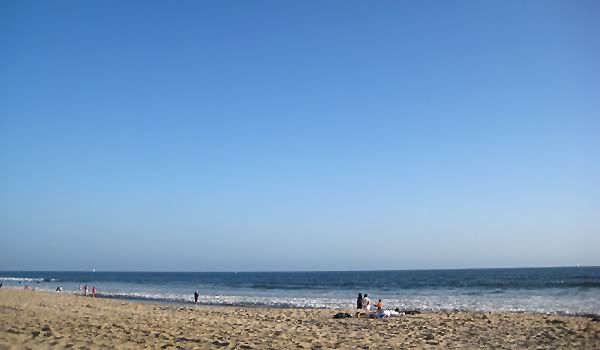 The two greatest natural assets that Southern California has are, to me, its weather and the Pacific coast. And today was a great day to enjoy them with my wife and our princess. To combat the slight late afternoon wind chill, I brought along my tea set and a canister of high-fired Taiwanese Dong Ding oolong1.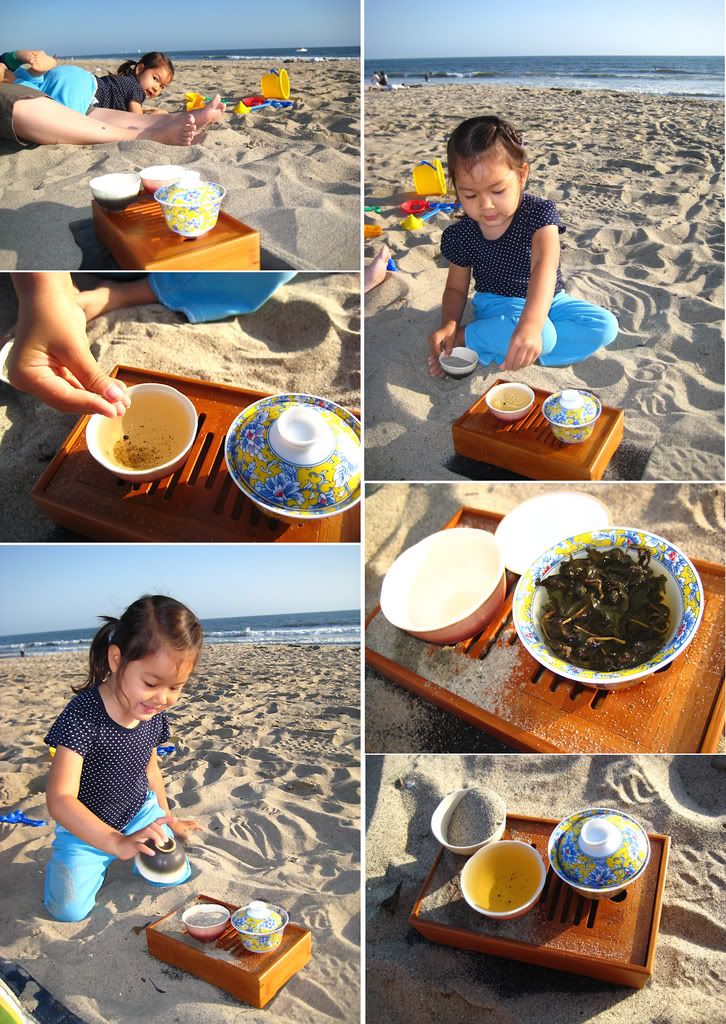
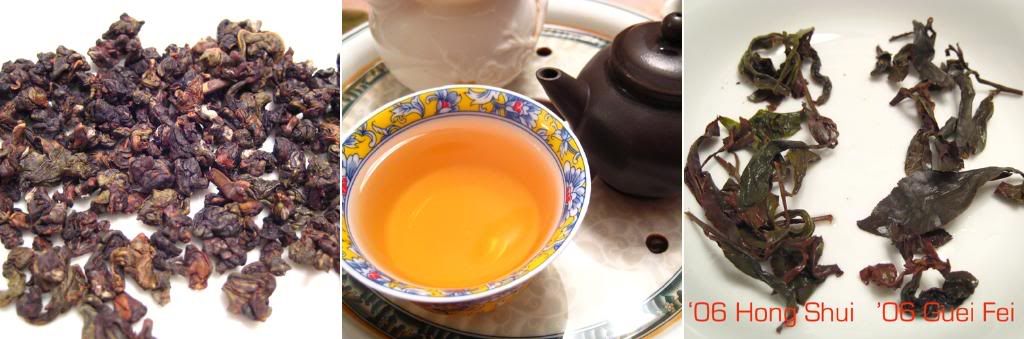 As noted in Stéphane's blog, this tea was still in the experimental stages, and therefore, its quality may be inconsistent from one vintage to another. I thought that given the amount of high oxidation that this tea received during its manufacture, it was worth comparing it to the 2006 Dong Ding "Hong Shui" (Red Water), which I noted quite some time ago. So I brewed the two teas one after another (with an hour of rest in between sessions). I found the Hong Shui to have a deeper and heavier overall perfume while lacking the high notes found in the Concubine tea. The Hong Shui, however, had a certain sweet, gingery warmth to its characters, which reminded me of entering a cozy home when gingerbread cookies are baking in the oven.
 Notice the side-by-side picture of the wet leaves (left side is the Hong Shui): they are quite similar in appearances and colors. The green part of the Hong Shui's leaves is a bit greener than the Gue Fei's, which is closer to being black-green. I wonder if it's caused by varietal/clonal difference, the degree of sunlight exposure or human factors such as processing techniques.
 Hobbes -- Tea Blogger of Note


