Showing posts with label White Tea. Show all posts

Tuesday, June 24, 2008

What is the Story Behind This Tea?

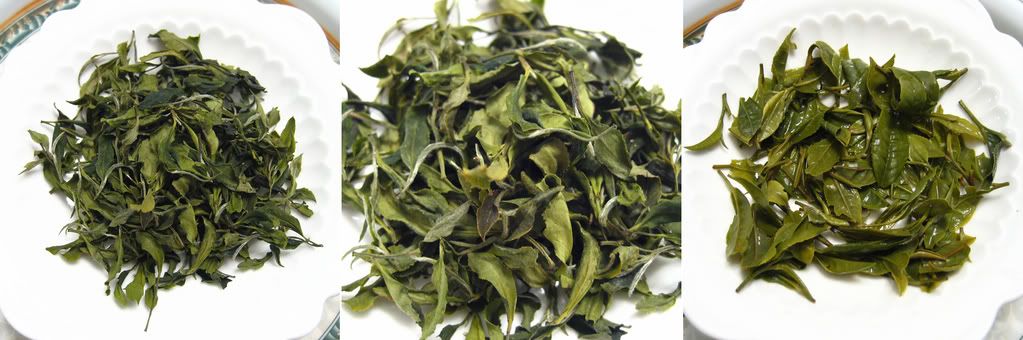
(Click picture to enlarge. L - R: Dry leaves ; Dry -- close up; Wet leaves)

What could you tell me about this tea...its origin, its original name, its tradition, its production method, its brewing method, etc.? The only information I have is where this tea was grown (Mirik, India) and that it is classified as a white tea. I would very much love to know more beyond the mere basics.

For now, all I know is not only the leaves look immaculate, but it also tastes pure and simply beautiful.

Thursday, August 30, 2007

2007 Doke White Tea, Kashanganj, 2nd Flush

Doke Tea Farm

While I enjoy subtler teas occasionally, I often find myself shying away from most white teas because I find them to be too delicate for my taste. So when T Ching featured this Indian white tea as part of its August online tasting, I reserved my opinion until I tasted it.

From Doke Tea in Darjeeling comes this 2nd flush white tea from the Kishanganj district of north eastern Bihar. This was to be my first white tea from the Darjeeling region, and it was a truly pleasant encounter.

The faces of Doke Tea (at least on the internet) have been its proprietor Mr. Rajiv Lochan and his nephew, Ankit Lochan. Before this tea, however, I have never known about Doke's own product line. This is partly because in addition to managing Doke, the uncle-nephew team is also in the wholesale business of other producers' teas through their Lochan Tea Limited enterprise. T Ching has in the past featured selections from the Lochan Tea Limited’s portfolio.

In addition to being in the tea business, they also manage a charitable organization, The Indus Foundation, which aims to improve the living conditions of the surrounding local districts.

Tasting Notes

2007 Doke "Kashanganj Snow Bud"
White Tea, 2nd Flush, Organic
Output: 50 kilograms per annum
Available for sale at T Ching Store

Dry leaf's appearance: Whole buds. Medium green and silver in color due to being covered in silvery down.

Nose: Refreshing. Of muscatel, passion fruits and exotic spices.

Taste: This Kashanganj white tea delivers a more upfront and assertive nose and taste than any Chinese white teas I have ever tasted. One smell and you can't miss that Darjeeling signature muscatel quality. Slightly grassy. The high notes and the judicious amount of acidity is refreshing and lively, giving oneself an energized feel after drinking it. It is medium to full bodied and smooth. Plenty of astringency and a touch bitter if brewed in a higher temperature water (90' C and above). The aftertaste is lingering and sweet in the back of the throat.

Wet leaf's appearance: Dark green with red streaks that indicates some oxidation was allowed to happen before halted.

Overall impression: This is a fine white tea with the unmistakable Darjeeling characteristics. It is also a white tea that stands well to high temperature brewing (> 90’C), as long as it is given a much shorter steeping time. Based on quality of the white tea sample that I received, I dare say that it is a tea worth pursuing and watching for in the future.

One of the attributes of Darjeeling tea that I find very pleasing is its acidity, which seems to bring liveliness to a tea. It also makes the tea highly compatible with many types of food, especially the rich tasting ones, by providing a juxtaposition of tastes.

4+ stars (vg - ex)

The following excerpt is by Mr. Rajiv Lochan:

On 1st June 1999 Indian Tea Board declared Kishangunj district of north eastern Bihar as a non-traditional tea growing area, though we had started planting tea little earlier in 1998 in Pothia block of this district.

Last month I was called by the Deputy chief minister regarding land and labour policy matters and came to know that Kishangunj was known as “poor man’s Darjeeling” since people who could not afford to go to Darjeeling in olden days could enjoy the beauty of Kanchenjunga from a little distance, that is Kishangunj.

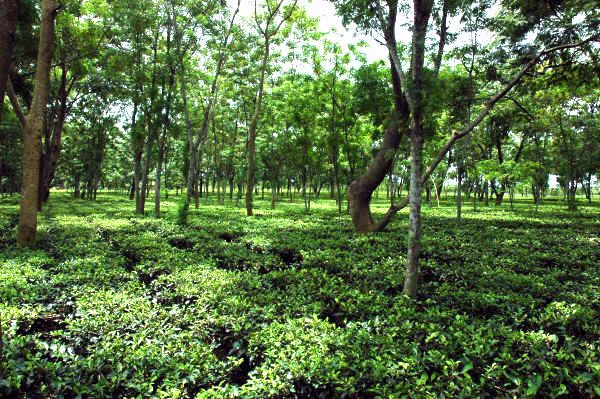
Doke plantation, where these teas are grown is south of Jhapa and Illam districts of Nepal and south west of Darjeeling and snow capped mountains are about 25 kilometers as the crow flies, though the foothills are only 7 kilometers away. On a clear day one can have a panoramic view of Himalayas and if one is lucky evening setting sun lights up Mount Everest to be visible from Doke.

We have found burnt clay pottery broken pieces buried as deep as two feet all over the planting area and a legend says that during the ancient times of Virat kings who had Viratnagar as their capital and Thakurgunj as their river port on the banks of Mahananda river, there was a potters village in this location, which legendary Shrawan Kumar visited along with his blind parents and stayed overnight.

Bihar being the land of Buddha and full of ancient history, it seems history is repeating itself here in Doke and we wish to make full use of it."

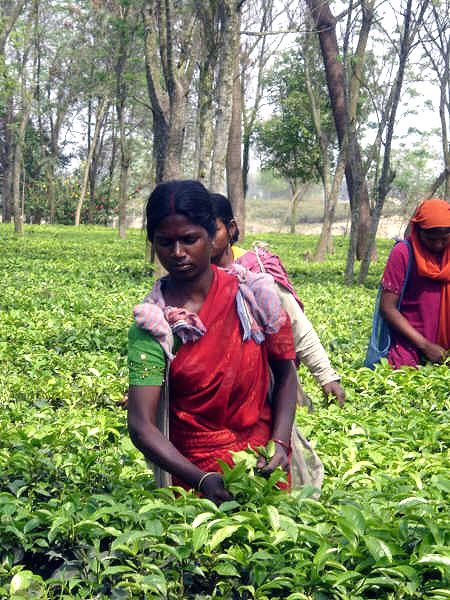
Images, with the exception of the tasting session photos, were provided by and used with prior permission from Mr. Ankit Lochan of Doke Tea.


Other excellent reviews at: MarshalN, PalatabiliTEA, Perplexitea, T Ching