Friday, June 22, 2007

June 2007 Pasadena Pu’er Tasting Event, Part II: Prior to the Event

Part II: Prior to the Event

On February 27, I received an email from Guang titled “Need Your Opinion”, in which he asked for my recommendation on places to host the first USA Pu’er Tasting Event at. I told Guang that the better place to hold such a cultural event, in my honest opinion, is in San Francisco for many obvious reasons. While uttering that, however, I also thought that Los Angeles could potentially be a great place. So I suggested that he contact his SF acquaintances for their recommendations while I turn my wheels for the venues in Los Angeles.

A day later I came up with four ideas (alpha, in no order of preference):
1. The
Chinese American Museum in downtown Los Angeles (C.A.M.)
2. The
Descanso Gardens in La Canada (D.G.)
3. The
Huntington Library in San Marino (H.L.), and
4. The
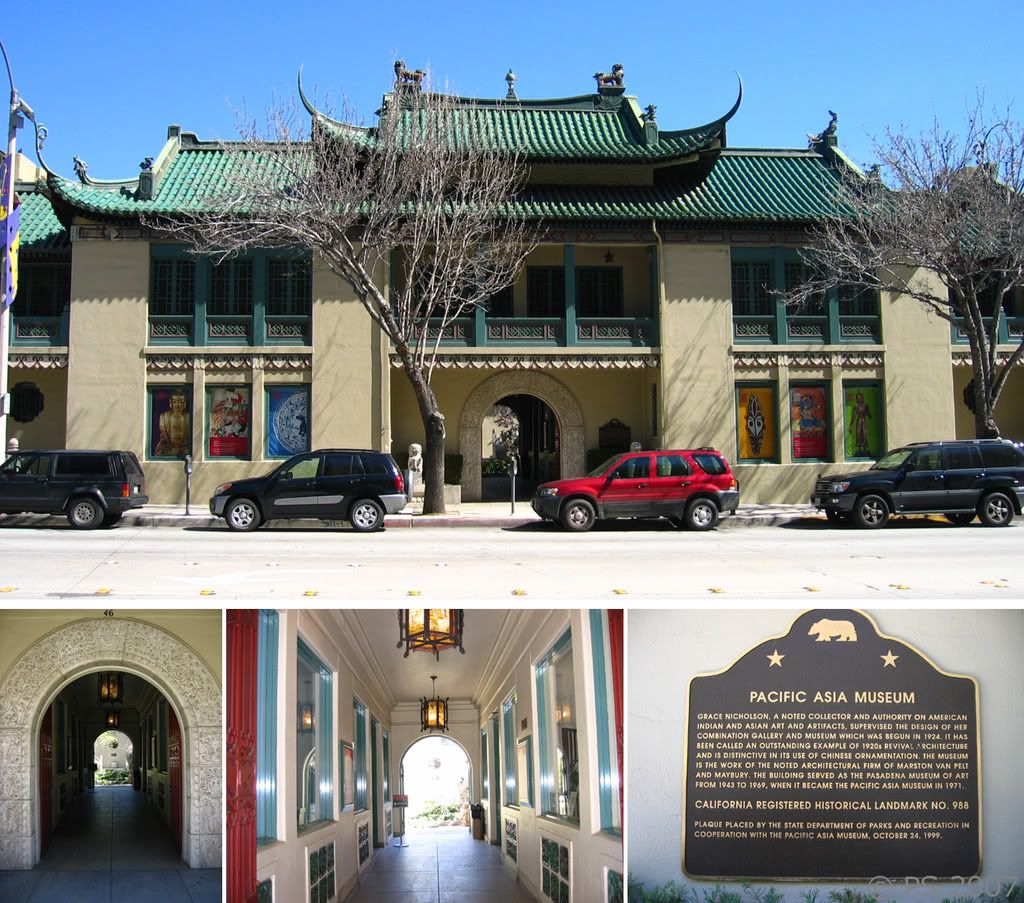
Pacific Asia Museum in Pasadena (P.A.M.)

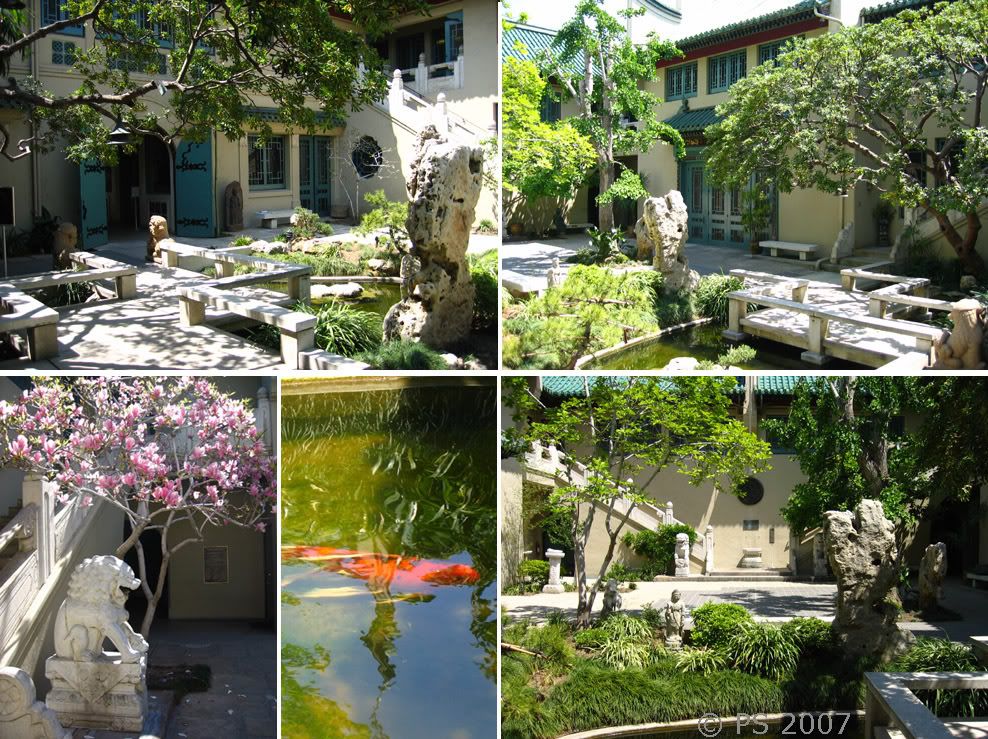
The P.A.M. was available to host us in mid-June. It was unclear whether or not C.A.M. has the facility to host a third-party function (they never returned my calls). The D.G. and the H.L., unfortunately, were already fully booked in June. My heavy favorite at the time was the D.G. for its beautiful outdoor settings. However, when I scouted the P.A.M, I was very pleased with how the museum's courtyard feel and look. I immediately told Guang that the P.A.M. would be the perfect venue to hold his pu’er party at should he commit to having it in Los Angeles.

After Guang received many photographs and videos of the museum from me, and after he found out that such a beautiful Qing-dynasty style courtyard can be rented for only a fraction of the price of another Asian oriented museum (forgot which) in SF, he finally made his decision and booked the P.A.M. for the June 16th engagement. Well, it was just my luck, I thought…I wouldn’t have to travel far after all! The P.A.M. is practically a 10-minute walk from my office.


Thereafter, Guang and I were out of contact for a few weeks. I was under the assumption that he knew someone else who could organize the party on his behalf. I mean, after all, he only asked for my suggestions about the venues.

In mid-April I contacted Guang to ask if everything was underway. His reply, to my surprise, was that he hoped I could help with the organization of the event. I was hesitant at first, although I was also quite piqued by the challenge. Besides, the event was still 2 months away from then, so the preparation could still be done at a somewhat leisurely pace. He and I immediately took on the project together and we consolidated our vision.

During the ensuing 2 months, we slowly and carefully planned the project. Among other things, I selected the tables, chairs, linens, bowls, trays, utensils, umbrellas, etc. from the rental company’s wide selections. We wanted it to be understated yet elegant. Guang was in charge of inviting the guests and announcing the event to the public. We also figured out the logistics on how to get the tea utensils from Houston to Los Angeles.

My meetings with Gabriella Karsch, the Director of Events at the P.A.M., were always constructive and pleasant. Through her, I was introduced to vendors that P.A.M. had prior satisfying experiences with. She also made sure that I did not forget the little details that may have been unintentionally omitted, such as knowing the power limitations of the museum. This was resolved by renting an extra power generator to make sure that all 5 power-hungry electric kettles could run concurrently without blowing any fuse. My gratitude towards Gabriella is overflowing.


Everything was under good control…that was until the day before the event itself. Crises ensued on June 15th due to the fact that FedEx failed to deliver the six poster-sized pictures that I had ordered for enlargement. To make matter worse, on that same day and at the time when I should be sprinting to a nearby Kinko's to get the posters re-printed, Aaron Fisher called to let me know that he was stuck at the Greyhound bus station on Alameda and 7th Street (not a good part of our city). Apparently, his bus from SF to LA had broken down on the way, and so he missed his connecting bus that would have taken him from downtown to Pasadena. The two crises were resolved eventually, but not without much angst and cash. It costs 4 times more expensive to re-print the posters at Kinko’s than at Snapfish (an online photo vendor).

After picking Aaron up at the downtown bus station, we immediately headed towards the Hilton Hotel in Pasadena. We chatted and got to know each other better while waiting for Guang, Liang, Apple and Chen to arrive at the hotel. It was not until about 10pm that they finally showed up. This was to be my first meeting with Guang, the man who I have corresponded with for the past year or so, but only through emails and phone until that day. We were mutually happy to have finally met each other in person.

I was invited to Aaron’s and Guang’s room to further plan the next day’s kick off. To whet our tired and dry beaks, Aaron brandished his small silver teapot (“Such an ugly teapot,” Guang said jokingly) and started brewing his stash of 1930’s sheng pu'er that is made entirely of small gong-ting buds. We used one of Guang's electric kettles to boil some bottled water.

While sipping on this extremely smooth, rounded and naturally sweet tea, we talked about what was going to happen tomorrow. Everyone was anxious, and especially me because there were still many important errands on my to do list that I had to accomplish before arriving at the museum.
I left their hotel room at around half past midnight and reached my home at around one o'clock. I was exhausted by then and no longer had the energy to be anxious any longer. But I remember that I was still enjoying the aftertaste of Aaron's 1930's pu'er. The sweet taste in my throat lingered for a long time and I felt as if my esophagus all the way to my stomach was coated in a light mint-y sensation. It was quite a pleasant feeling.

Tomorrow (well, that same day to be exact, since it was past midnight) was going to be a long, exciting day…that was if I could manage to complete my long list of tasks before 12 noon!

To be continued...

Thursday, June 21, 2007

June 2007 Pasadena Pu’er Tasting Event, Part I: Thank You!

Part I: Thank you!

Last night I drove Chen Zhi-Tong, the tea master/maker/author, to the Los Angeles International Airport for his flight back to Taipei. This marked the end of my commitment to the pu'er event. As such, I am inclined to share with you my experiences surrounding the organization, preparation, and execution of the Pasadena Pu'er Tasting ("Event").

Before delving into the details, however, it is only most appropriate to extend my utmost gratitude to the following individuals. Without them, this Event simply would have been much less of a success than it had become.

Dr. Lee Guang-Chung (Guang) of
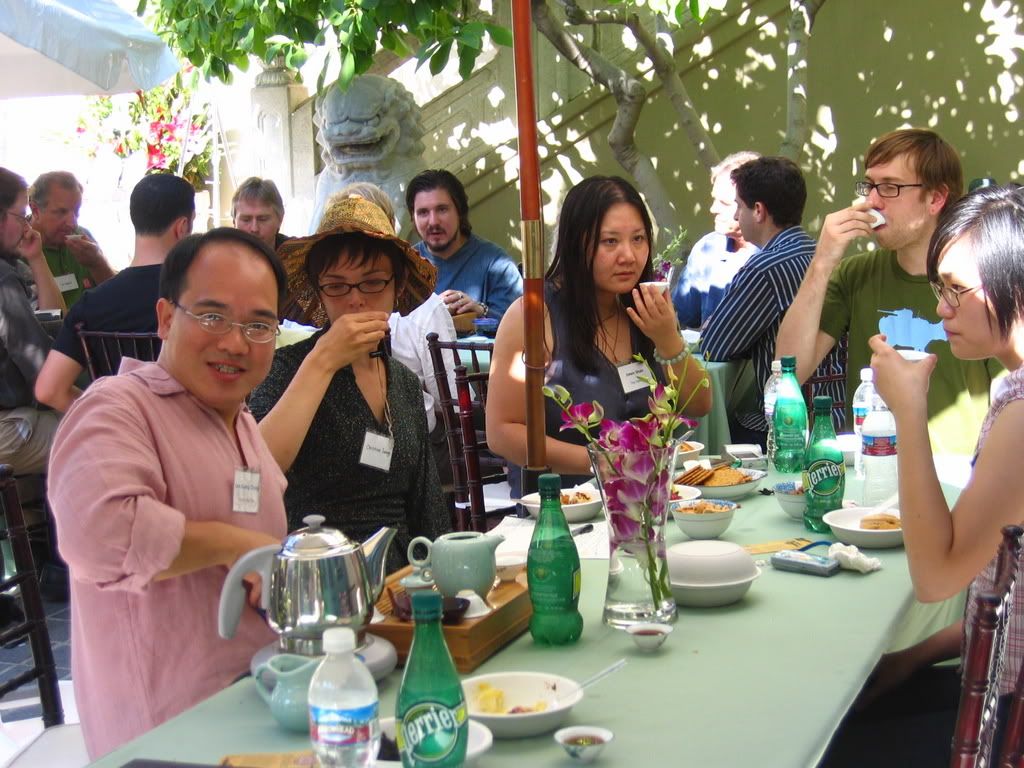
Houde Fine Tea – the Event was certainly the brainchild of Guang and the Wu Shing Publication. Guang was instrumental in pulling the day off successfully by providing guidance, advice and direction (not to mention the $funds$). Most of the legworks that I helped with were done under his vision and supervision. And thank you for the teas we drank!

[Guang, in pink shirt]

Mr. Liang Chun-Chih of Wu Shing Publication – for taking a chance with the tea enthusiasts in the USA. If it wasn’t for his entrepreneurial gamble, the Event would not have materialized, let alone considered in the first place. The US market in general, by relative measure, is still in its early stages of fine tea appreciation, and most especially pu’er appreciation. This Pasadena Event and the continued publication of the Art of Tea magazine lay the necessary ground works from which more interests will grow out of. I hope that his actions and vision will bear him fruits in the future, sooner or later.

Mr. Chen Zhi-Tong, Tea Master/Maker and author of the “The Profound World of Chi-Tse" – for his boundless passion, in-depth understanding and generosity with sharing with us, laymen, his knowledge on pu’er. What he shared was perhaps less than the tip of the iceberg, but I believe he had done a swell job at encouraging the audience’s interest in pu’er tea.

Aaron D. Fisher, Sr. Editor, The A
rt of Tea – for his indomitably creative spirit and his focused mindset on how to promote pu’er tea and the magazine. His presence at the Pasadena Pu’er Event gave us the opportunity to meet the person who plays a large role in our enjoyment of the Art of Tea magazine, from cover to cover. It was only appropriate that he stepped out from behind the curtain. Those who sat at the tasting table with him must have learned a lot that day.

Gabriella Karsch, Director of Events,
Pacific Asia Museum – for her enthusiastic support of the Event and her crucial connection with reliable contractors and vendors. It was through a positive karmic affinity that the pu’er event should be held at her museum. Gabriella is a pioneer of the tea industry herself with years of experience running the China Indo Tea Company, a company that she founded in the early 1990’s. No one could ask for a better host who understands the significance of our function!

Robert Williams of
Partyline Events (a party rental company) in San Gabriel, CA – for his top-notch professionalism and for executing an excellent blitz of a set up on D-Day. His tenacity and insistence on perfection made the day! I was a demanding client and Robert was always gracious under pressure and time constraints. I can not recommend him and his company enough for any large or small party projects. Bravo sir!

The L.A. Tea Group members:

Imen Shan of
Tea Habitat and Tea Obsession blog – for her support and sponsorship of the desserts and some crucial tea equipment. Her contributions and support ensured that all tasting tables were functional.

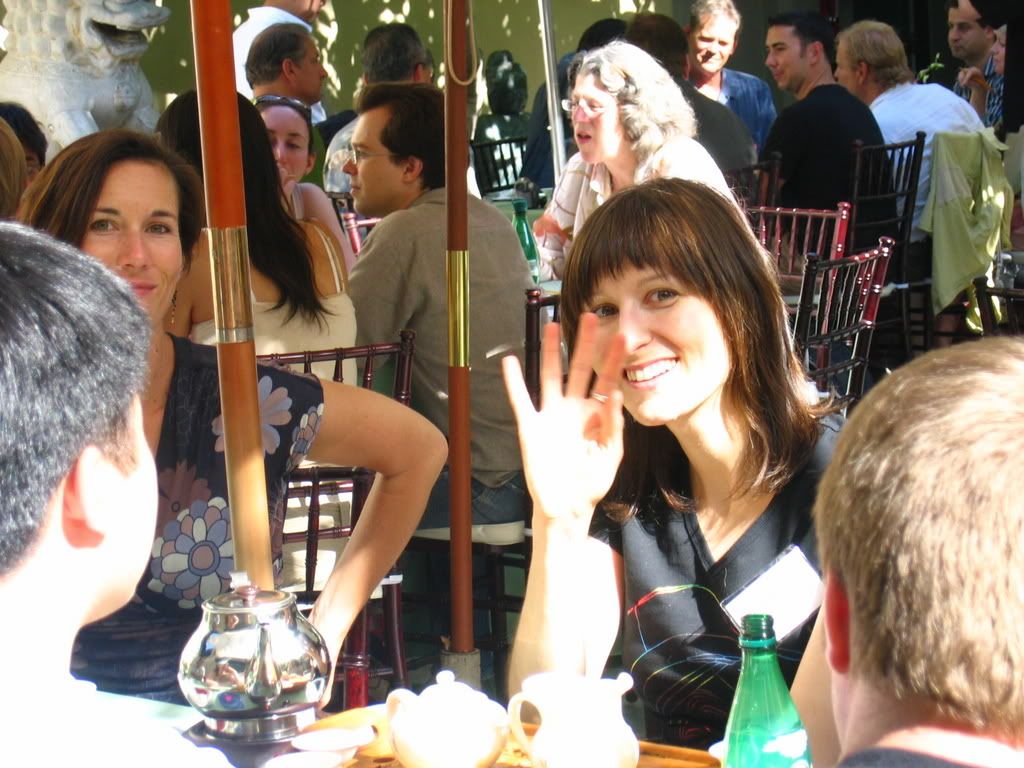
Danica Radovanov – For her acceptance to host one of the tasting tables at last moment’s notice. I could only wish to be at her table drinking the tea that she brewed.


[Danica waving at the camera]

And others of the LA Tea Group for their detailed assistance such as music selections and other useful ideas.

Last and definitely not least, the 50 plus attendees! What can I say? The event would have meant nothing without you, ladies and gents! My immediate thanks go to those who were at the table which I led (with much perspiration). I hope I had been able to deliver decent teas and provide relevant information to those who asked me questions. I am by no means an authority of the teas that we drank together or to pu’er tea in general. I did my best to answer your questions, however, but I hope you will take my words with a grain of salt in mind. It was an honor to have drunk tea with you. I hope we can be better acquainted in the future, near or far.

Thank you all, again. It was an honor and the pleasure was all mine.

Sunday, June 17, 2007

What a Day!

It's currently 12:40am on Sunday, and I just got back from dinner in Pasadena with a bunch of people, including Chen Zhi Tong, Guang, Liang Chun Chih (Executive Editor of the Art of Tea mag), Aaron Fisher (Sr. Editor) and most of the LA Tea Affair members. Drank too much great wines, too.

(I am a bit tipsy as I am writing this)

What an amazing day! I made acquaintances with so many great people from various trades and background. And we brewed teas from the 1950's Hong Yin, 1960's Ba Zhong Huang Yin, 1990's Menghai Green Big Tree, and other outstanding old and young teas (I was asked to take charge of one of the tasting tables).

More later. I am too drunk and tired...and tomorrow will be a long day again, starting with a 9am dim sum with Mary Lou Heiss, Robert J. Heiss (both tea book authors), Guang, Chen Zhi Tong, and others.

Good night!

Sunday, June 10, 2007

At Imen's Tea Habitat & The Long Beach Aquarium

[Behind bar L - R: Louise, Will, yours truly, Imen and Nick; guests are seated]

I had a great time at Imen's new tea lounge, Tea Habitat, on Saturday. It's located in the very upscale neighborhood of Palos Verdes. As it was the grand opening event, drinks were on the house...gongfu style! I volunteered to help with brewing the teas and serving the guests. Time passed like a blur, but I remember handling 2 to 3 gaiwans with different teas in them at the same time, while guests kept pouring in and questions were pouring out. It was a hectic sort of fun!

The customers asked me many questions, and especially often was the question on the differences between the types of tea (green vs. white vs. oolong, vs. black, etc.).

Louise, Will and Nick were there to help out as well. We drank and chatted with each other and with the guests. A young girl (10 or 12 years old at most) whom I served tea with was quite amazing in her ability to describe aromas. When I brewed a white tea named Jade Pole (leaves are rolled and shaped like butterfly chrysalides) for her, she immediately said "Wow, it smells like hot dog!" While I didn't necessarily relate the tea's smell to hot dog, it did smell like smoked meat or bacon. Bravo young lady!

Good stuff that I enjoyed at Imen's: Da Hong Pao (which I mistook for Dan Cong because of its fruitiness), Dan Cong, Jade Pole white tea, non-roasted Baozhong and roasted Baozhong.

After closing time, we popped open a 1996 Laurent-Perrier Champagne that I brought along to celebrate the grand opening (tight, citrussy and refreshing...very "1996" in taste and structure, as compared to other 1996 Champanges I have had. It probably still has a decade or so of life to mellow itself out).


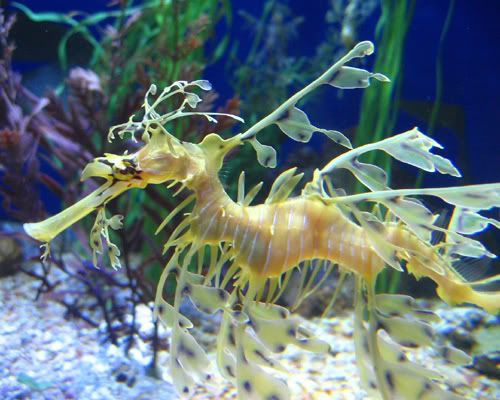
On Sunday, I went to the Long Beach Aquarium with my family. Another fun excursion! My not-so-baby-anymore daughter was fascinated with every swimming thing behind the glass, especially the sea otters.

Me...I love those Sea Dragons! Such an amazing looking creature!


Thursday, June 7, 2007

Mr. Madan Tamang and His Meghma Estate Oolong

PREFACE

Back in October 2006, I had the pleasure of enjoying Meghma Tea Garden's autumnal oolong from the Eastern Nepal. A discussion on whether the tea was hand processed / rolled ensued under that post. The sample received and tasted then was too broken for proper observation.

I have had again the pleasure of drinking this tea (recently purchased, not the same order as last October's sample).


In Eastern Nepal, close to the border that separates it from India's Darjeeling district, Mr. Madan Tamang grows Camellia sinensis and rhododendrons. The tea estate, aptly named after his ancestral village of Meghma, produces one of the most natural and unique oolong teas in the world.

The words “remote”, “no road”, and “purest” have been used to describe Mr. Tamang’s Meghma estate and its production methods. That is understandable, considering that the tea processing facility is located at about 7,000 feet or higher. This is a place in Nepal where electricity (by public utility) has not dared reach and where “charcoal” has to be handmade to fuel the roasting of the tea.

Tasting Note: 2006 Meghma Tea Estate, Autumn Harvest Oolong, Khalikhop Valley, Eastern Nepal


Source: The Simple Leaf Tea under the name "Honeybee" ($13.95 per 4oz)

Dry leaves: bouquet of nuts, honey, very ripe mango and high notes of yellow tropical fruits' acidity. When thrown into a warmed-up gaiwan, the leaves exude deeper and sweeter aforementioned aromas. Lovely!

Brewing parameter (gongfu): 205 – 208 F (96 – 98 C) spring water, dry leaves filling 1/3 of the gaiwan, flash rinse, then 5s, 5s, 10s, 15s, 30s, 1m.

The liquor’s medium amber color and its crystal clear clarity remind me, somehow, of eau de vie that has slumbered for many decades in oak barrels. Nutty with honey-like taste and a touch of acidity that brings the tea alive. The texture is smooth and a bit oily. Medium bodied. Finishes with an earthy, dark mushroom taste that lingers. After swallowing, the tea’s astringency is felt and it produces a mouth-drying effect. I feel thirsty again quite instantly.

The leaves are decidedly larger and more whole than last October's sample. I say "more whole" because the steeped leaves are a mix of whole and chopped leaves as well as stems.

This tea is rather easily spent, however, managing to produce 4 delicious infusions before turning watery. A lovely and complex tea overall, while it lasts.

4 stars (very good)

Were the leaves hand processed and rolled, then? According to Mr. Tamang in his interview with Nikhil of The Simple Leaf Tea:

Yes, our tea is completely hand rolled. Our methods are actually very simple - after plucking the green leaf, it is manually hand-rolled and then spread out on a table and covered with a moist cloth for the semi-fermentation process to begin. This takes up to 4 hours.

The leaves are then placed on large pans with handles and charcoal-fired for about 10 to 15 minutes, depending on atmospheric conditions.

The leaves are then placed on a table for cooling - up to 3 or 4 hours. These unsorted, dried leaves are then passed through a series of meshes of varying sizes to separate the larger leaves from the smaller ones. In the industry, we call this grading. Finally, we pack the tea into plywood chests or paper sacks and the production process is complete."

Every time I brew Mr. Tamang's oolong, it enchants me with its exquisite bouquet and taste. He has got a fan in me. His latest 2007 spring oolong will soon be available for sale, and I look forward to tasting the fresh crop.

References:
Rajiv Lochan
discussed briefly about Mr. Tamang’s biodynamic farming approach at T Ching.

Nikhil Roychowdhury of The Simple Leaf Tea conducted a
one-on-one interview with the man himself. Find out who Madan Tamang is, his agricultural approach and his vision.

(Photo of Madan Tamang provided by The Simple Leaf Tea)

Sunday, June 3, 2007

Barbara Holland on The Joy of Drinking

Folks, we may be taking things too seriously with our beverages. Barbara Holland would heartily agree with my previous sentence and offer a toast to that.

I just read a provocative article in The Washington Post by Peter Carlson about his interview with the author of the recently released The Joy of Drinking (which she thinks should be sold as a package with The Joy of Cooking and The Joy of Sex). Strangely and twistedly, I think she gets it. By it I meant joie de vivre.

Alcohol, she writes, is "the social glue of the human race." Other interesting quotes:

There's a local restaurant where, when I show up, they get me a glass of merlot," she says, "and everybody keeps telling me that nobody is drinking merlot any more; everybody is drinking pinot noir. Well, frankly, darling, I'm not sure I could tell the difference."

Everybody is horrified that I don't insist on a single malt and I don't have an opinion on Glenfiddich and all that," she says. "People want to impress me and they serve me Cutty Sark, which tastes like white wine to me. I like ice cubes in my Scotch, but apparently it's illegal to put ice cubes in a single malt. You are allowed to put in a teaspoon of water to bring out the nose."

Her book is going into my shopping cart. It's probably going to be a guilty-pleasure kind of summer reading.


The full article at washingtonpost.com and The New York Times. Registration may be required.

Retasting "Glad I" Pu'er From MarshalN

I guess to enjoy or to dislike a tea is easy; To know a tea is harder; To understand a tea takes time; And to be indifferent is the easiest.

I learned a simple yet useful lesson: tasting multiple teas side-by-side, if done hastily, may not reveal the character of each fully. If the goodness of one tea is only revealed a few moments after swallowing the liquor, then the forthcoming sensation will get lost or muddled if another tea is tasted too soon. It is a common sense that I need to remind myself with whenever there are multiple teas (or wines) being tasted in one sitting.

I re-tasted Glad I sample from MarshalN, which turns out to be a 2003(?) Quanji Bulang Mountain Pu'er. In my previous post, I slammed this tea as being "not good, not bad". So I sat down this time with no pen, paper or camera until after I was done drinking 12 or so infusions of it. It was a one-on-one date.

This time around, I couldn't find any obvious flaw with the tea. Yes, it was bitter like a vegetable concoction from an over brewed green tea, and the bitterness lingers for a while. But then, as others noticed and I didn't before, the bitterness "melted" to become a subtle sweet sensation on the fore-throat and the very back of the throat. It was a nice feeling. Yes, the astringency was present, yet it was present in a similar way that other well regarded young pu'ers are also astringent (ex. the 2004 Yan Ching Hao Yiwu Chawang, which I re-tasted a few hours later, also with no pen, paper or camera). The yun and the body of this Bulang pu'er was good. The chaqi was quite apparent, with energy circling my body slowly but surely after 3 infusions or so (calming, with no sudden attack).

Everything seemed to be in good balance without any flaw or merit that deserved a wow at present, yet there was a certain presence and understated sophistication about this tea that was noticeable only when I observed carefully and patiently. Perhaps such a pu'er tea is one that will stand the test of time. I am inclined to concur with several others who opined that this tea has a good aging potential. Everything seems to be just there without over-exertion.

A lesson learned. With tea and wine, to drink slow is a virtue. And a re-taste is warranted on those that get overly bad or good impression for less obvious reasons the first time around. After all, a debatable crap today may be a debatable gem later, and vice versa. My revised score, as if it matters: 3.5 stars (g - vg), with good potential for long-term aging.

Related notes:
MarshalN's note on sample 1
Other participants' notes on sample 1

Photo: Wet leaves. Camera set at "neutral color", which somehow gives an unnatural grey hue to the picture (to my eyes). For reference and comparison with the pictures in the previous post, which were taken with "vivid color" setting.

Tuesday, May 29, 2007

Two Pu'er Samples From MarshalN

Dear MarshalN:

Thank you for the pu’er samples! I have tasted them side-by-side, and I hope my findings are relevant to the collective opinion of those who also received these same samples. Please find my tasting notes and comments below. As with the tea samples that you have generously shared with me in the past, you have again challenged my taste buds and knowledge. This has been a relevant exercise, and if I am mistaken in my opinion, I can only attribute that to my lack of experience and shallow mental references.

Many thanks again and I hope to reciprocate in the near future.

Your friend in tea,

~ Phyll

I am very glad to have received MarshalN’s pu’er samples, which traveled all the way from China to me in Los Angeles. It took its time getting here, however. Double glad that they arrived intact. Inscribed on the bags that hold the samples are letters A and I, separately. Purely on account of how I feel, I will refer to them as Glad A and Glad I below :)

As of writing this note, I have absolutely no idea about the vintages, producers and the exact origins of these samples.

[Brewing parameter for both samples: Crystal Geyser spring water, about 7gr in 100ml gaiwans, boiling water. 10s rinse, and then 10s, 10s, 10s, 15s, 15s]

Glad I
Dry leaves are dark green-colored with streaks of white, downy leaves. There are a little amount of brown leaves intermixed as well. It seems to me that the oxidation of the leaves is a bit inconsistent throughout. It looks like a one or two-year old tea. It smells fresh, plummy, fruity and a bit smoky. Quite inviting. After rinsing however, the aroma of the wet leaves becomes ashy…as in cigarette ash. Not a pleasant nose for me.

Excellent clarity. The brew comes out medium yellow-greenish color. It tastes bitter! From the 1st until its 5th infusion (I stopped after that), the tea tastes like a bitter vegetable concoction. In more ways than one, the taste reminds me of the time when I over brewed some cheap Taiping Houkui green tea, actually. The body is thin to medium and it has a mouth coating astringency. Not a pleasant tea to drink and I suppose this is an example of green tea parading as pu’er, although I am not 100% sure.

The spent leaves look quite appealing; mostly fresh green with some showing reddish hues. Most are half-chopped. Plantation leaves? 1 star (not good, not bad).


Glad A
Dry leaves range from being reddish-brown to very deep brown with some hairy white streaks here and there. I suspect that this tea was lightly “cooked” or at least mixed with some lightly cooked leaves. The aroma, when still dry, is like a deeper tone of smoke and plum, especially when compared to Glad I. And it also has a hint of light shu smell. Maybe my nose is playing a trick on me? After rinsing, the wet leaves give off the smell of talcum and tobacco.

The brew comes out slightly foggy, but still quite clear overall. Medium brownish-red color. This tea is certainly mellower, smoother and less green tasting than sample Glad I. In fact, there is hardly any bitterness in its taste. Each brew has soft astringency and plummy qualities to it. The aftertaste is quite pleasant and sweet, which further persuades me to attribute the tea to being the semi-shu kind.

Overall, though, the tea is rather simple, boring and lacks any character. Weak chaqi. It certainly is more enjoyable to drink this than sample Glad I, however.

Spent leaves look brownish-red overall. I set aside several leaves and stems that look the darkest among the bunch…and the more I inspect these few dark leaves/stems, the more convinced I am that this tea is a mix of lightly cooked leaves or contains cooked leaves for added smoothness and approachability for earlier consumption. 2 stars (mg).

Monday, May 28, 2007

Le Petit Restaurant on Ventura Boulevard

Oftentimes, the litmus test of a fine [western] restaurant is its wine service. Simply put, a knowledgeable and gracious waiter or sommelier truly makes a dining experience more sublime. Le Petit Restaurant (formerly Le Petite Bistro) excels in this regard without much pomp.

Located on Ventura Boulevard in Sherman Oaks, Le Petit has been one of my favorite French bistros. This semi-casual, small restaurant with an intimate and personal atmosphere is a place that my wife and I have patronized for the past 5 years or more (more regularly before the birth our daughter). I would attribute our loyalty as patrons to their courteous service, the good food, decent prices, and perhaps most of all, their gracious wine service.

Their wine menu, while neither extensive nor exquisite, should manage to serve most occasions. Bottle prices are very reasonable (’04 Kistler Les Noisetiers Chardonnay for $75…about the same at retail.) and half-bottles are available as well. Best of all, they allow guests to bring our own wine for a $10 corkage fee. To me, this speaks loudly about how they regard wine as unpretentious accompaniments to their cuisine. On most visits, I bring my own to Le Petit and happily pay the reasonable corkage fee, which pays for a first class service. It’s worth it.

When my wife and I visited Le Petit for the umpteenth time last Saturday, we brought a 2001 Chard Farm Pinot Noir Finla Mor from Central Otago, New Zealand. We purchased this very bottle from a store in the Marlborough wine country during our honeymoon 4 years ago. It was the very same wine that we enjoyed together at Orbit, the restaurant on the top of the Sky City Tower in Auckland. Suffice to say, each delicious sip of this wine brought back fond memories.

Upon arriving, our waiter graciously acknowledged the bottle in my hand, inspected its label, and readily prepared 2 Riedel crystal globes on the table. When we told him that we’d start with something harder as aperitifs, he gladly uncorked the wine to let it “air” while we enjoyed very delicious lime margarita (for her) and a smooth Grey Goose vodka martini with olives. Both cocktails hit the spot just right and wound us down sufficiently.

(At 10pm, less crowded by then)

Our waiter insisted that we did not hurry with ordering our dishes, and we were more than happy to oblige his suggestion. We eventually ended up with a plate of César salad and a bowl of onion soup gratinée with melted Gruyere cheese for starters. As entrées went, we ordered a filet mignon with garlic mashed potatoes and Dijon brandy sauce (for her), and a grilled veal chop with shallots, asparagus and mashed potatoes. Both entrées were cooked to medium temperature perfection. We closed our meal with an order of raspberry crème brûlée to share. Everything was excellent, except for the onion soup, which I found to be a bit too salty.

Another pleasant point about Le Petit’s wine service: asking for a bucket of ice to cool my red wine was a totally painless experience. The request was complied without a single flinch or a note of absurdness. On many occasions at other lesser “fine” establishments, I had to reconfirm my intent, either in response to a polite inquiry or by the server’s unintentional body language.

And the ‘01 Chard Farm Pinot that we brought to the restaurant? Just great to pair with the dishes we had. It was supple and mellow, yet resplendent with red berries, cherries and lively acidity. 4 stars (vg).

The wine took us back to the top of Auckland. The only downside being this was the only bottle I had, and I have not been able to find one by the same producer in the United States (online or otherwise).


Le Petit Restaurant (formerly Le Petite Bistro)
13360 Ventura Boulevard
Sherman Oaks, CA 91423

Food 3.75 stars (g – vg)
Wine selections 3 stars (g), corkage fee $10 per 750ml
Service 4.5 stars (vg – ex)
Overall 4 stars (vg)

Saturday, May 26, 2007

1960's Guang Yun Gong Pu'er, Liquid Jade Preview

Yesterday, after a simple lunch, I prepared the water to brew the 1960’s Guang Yun Gong. It was to be a handsome treat after an entire morning of running errands and shopping for groceries.

With the very little sample I got, I inspected the dried leaves carefully. I have apparently received a small chunk from the rim of the beeng and some loose leaves, which were intermixed with stems and twigs. A thin film of whiteness and some white spots here and there were present, an indication of wet storage. Then again, Guang Yun Gong is a "lightly cooked" type of pu’er, so perhaps this was expected. I could detect little smell, almost none. When thrown into the warmed up gaiwan, the heated dry leaves gave off faint aromas of earth, wood, black licorice and herbs. It was neither expressive nor impressive, but such is the nature of old pu’er. The reward often lies within its liquor, if the tea was any good.

I gave it a quick 5 seconds rinse and the tea water looked very promising indeed. Its color and clarity were excellent throughout. I let the leaves rest inside my gaiwan, lid closed, for a minute or slightly more, allowing the steamy banya to wake them up from their 40+ years slumber before the first infusion.


[Parameter: 5gr, 100ml gaiwan, 5s rinse, 10s, 10s, 10s, 10s, 15s, 25s, 25s, 35s, 45s, 1m, 1.5m]

I had a total of 11 brews, by which time it was on the brink of giving up. Not very durable, in retrospect. Throughout all the infusions, the tea tasted rather simple, clean and smooth. In fact, I can’t say that there was anything special from its taste. A little bit of earth and wood, thin bodied, with a slight sweetness in the mouth and finishes a bit mint-y. To sum, it tasted ordinary.

What it lacked in taste, however, was very well compensated by its strong qi and the way it made me feel physically. The first brew shot tingling sensations around my lower back and neck. The second warmed my shoulders and front. The third hit my head pretty hard. And by the fourth and fifth, I was sufficiently swimming in clouds. I felt quite tea drunk and high! It was a sensation I rarely get from merely 5 infusions, especially with a filled stomach after lunch. Conventional wisdom says that tea should not be drunk on an empty stomach. Should anyone have the desire to break this rule, be forewarned that this is not the tea to do it with.

I savored each cup slowly. On and off, I wandered about the events surrounding the decade in which the leaves of this tea were harvested. China was at the beginning of the cultural revolution, while in America, the sexual revolution was hitting high (wonder what Woodstock was like). The Indonesian communist party, allegedly supported by the Chinese embassy, unsuccessfully attempted a coup d'état against the then-present government, which resulted in the discriminatory anti-Chinese legislation. By the directives of the government of Indonesia, the country cut all ties with China. The Chinese diplomats were "deported" and the embassy shut down, no flights were allowed to and from China, Chinese schools were closed, Chinese books and publications were banned, and most out-reaching of all, I think, Chinese names were no longer allowed in the birth certificates of the children of Chinese immigrants. And then there were the war in Vietnam, The Beatles, the assassinations of JFK, Malcolm X and MLK, man on the moon (faked?),….


It is pretty amazing to think I was sipping a tea that came from an era I know only through stories that my elders told me, from books and from films.

At the end of the second cup, I grabbed from the bookshelf a book that arrived a few days ago: Liquid Jade by Beatrice Hohenegger. I skimmed through the Acknowledgement and the Preface sections quickly, and by the time my third brew was in the cup, an old tea poem greeted the first chapter:

On the peaks of Mount Ling,
a wondrous thing is gathered:
It is tea.
Every valley and hill is luxuriously covered
with this wealth of the Earth,
blessed with the sweet spirit of Heaven.
In the month of the harvest moon,
the farmers get little rest.
Couples at the same task, searching and picking.
take water from the flowing river Min,
drawn from its pure currents.
Select vessels and choose ceramics
produced from Eastern Ou.
Emulate the example of Duke Liu:
Serve tea with a gourd ladle;
In only this way can one begin to perfect
thick froth, afloat with the ‘splendor of the brew:’
Lustrous like piling snow,
resplendent like the spring florescence.

~ Tu Yu, Ode to Tea, 4th century C.E.

Four pages later, a quote from the Pen T’sao Ching, a medical book touted as one of the earliest in China:

“Tea is better than wine for it leadeth not to intoxication, neither does it cause a man to say foolish things, and repent thereof in his sober moments. It is better than water for it does not carry disease; neither does it act like a poison, as does water when the wells contain foul and rotten matter.”

Hmm, the very tea in my cup had leadeth me to intoxication.

That quote compelled me to stop reading at the moment. Another pro-tea, anti-wine opinion in a tea book within the first chapter, much like Okakura's The Book of Tea. I’ll pick Liquid Jade up again soon – for it has piqued my interest – perhaps with a glass of Chateau Musar in one hand.

Reviews and references
Review of 1960's GYG:
Half-Dipper by Hobbes
Background notes on the 1960's GYG:
Clouds on LJ Puerh Community, Hou De Blog
Review of Liquid Jade:
Cha Dao by Corax

Monday, May 14, 2007

Mother's Day Champagne

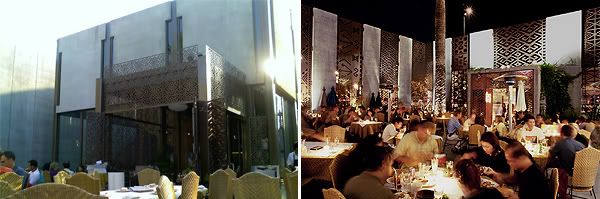
We celebrated Mother's Day by dining at Saladang Song, a trendy Thai restaurant in Pasadena. Its decor is uplifting, the food delicious, and best of all, the place is relatively family friendly (we had 3 naughty toddlers with us). The weather was perfect and so the 12 of us sat in the restaurant's patio. We all had a wonderful time, albeit the kids were running around being curious about everything.

Afterwards at home, I popped open a 1996 AR Lenoble blanc de blanc Champagne (Grand Cru -- Choully) for my lovely wife. The wine was wonderfully yeasty, toasty, lush and supple. It is full of sweet tangerine and ripe Granny Smith apple nose and taste. Its mousse is soft and mouth filling. A very good bubbly that is ready to drink now. 4 stars (vg).

Photos: Google, Flickr Creative Commons and Wine Spectator Magazine

Sunday, May 13, 2007

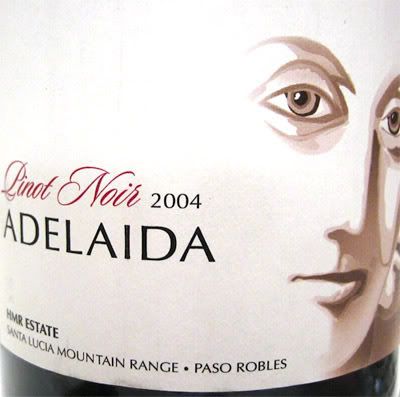
2004 Adelaida Pinot Noir, HMR Estate Vineyard

One week of agonizing respiratory infection is finally over and I can now enjoy my tea and wine properly again. I have been craving for the softness and suppleness of Pinot Noir. However, it was not meant to be.

When I purchased the 2004 Adelaida Cellar Pinot Noir, somehow I missed reading the "Paso Robles" designation that comes after the "Santa Lucia Mountain Range". I feel that Paso Robles is not the right place for the Pinot Noir variety -- the area is too hot -- and it shows in this bottling.


On the other hand, I have had a number of Pinot Noir from the Santa Lucia Highlands AVA, a viticultural area within the cool and beautiful Monterey County (80+ miles north of Paso Robles), and they have always been superbly balanced on the side of being feminine and earthy. Some of the more memorable wines are from the well known Pisoni vineyards.

2004 Adelaida Cellar Pinot Noir, HMR Estate vineyard, Santa Lucia Mountain Range, Paso Robles (14.2%, $27)

Deep and vibrant garnet color. Beautiful nose of ripe cherries, red berries, salty plums with hints of earthiness and dark chocolate. Full bodied, opulent and intense. Seems too overdone and alcoholic for a pinot noir and the wine seems to have been singed by excessive heat in the vineyards. Finishes with bitter dark chocolate. Ripe, grainy tannins. A complex and layered wine, but it tastes more like a syrah (pinot on steroids?). Not my kind of pinot. 2 stars (mg).

I feel that Paso Robles hot(ter) climate affected this wine detrimentally. It simply is too bombastic for a Pinot Noir. It could have easily passed as a Central Coast Syrah or Grenache wine if tasted blindly.

From the winery's website
www.adelaida.com

Pinot Noir HMR Estate 2004
The historic HMR Vineyard is located in the hills west of Paso Robles at an elevation of 1,700 feet. Planted in 1964, it is the oldest pinot vineyard throughout the entire South Central Coast of California, encompassing San Luis Obispo and Santa Barbara Counties. Just 14 miles from the Pacific Ocean, its unique microclimate benefits from cooling marine breezes. The Burgundian-like, fractured calcareous soils give the wine a complex element of terroir-focused flavors.

HMR wines have received much acclaim for over three decades. The "Maestro," Andre Tchelistcheff loved the wines from HMR, particularly the Pinot Noir. Since 1994, Adelaida Cellars has owned this prized vineyard, one that truly has earned its place in the annals of California wines.

A few swirls reveal the classic mélange of cherry fruit accented by Asian spice and exotic tea aromas. The HMR Pinot Noir is a more feminine pinot characteristically due to the influence of its limestone infected terroir. Like a French Volnay, its restrained delicacy of fruit makes it a perfect companion for grilled salmon, braised rabbit or Coq au Vin.


I beg to differ with the winery's "feminine" characterization. Tomboy-ish is probably closer to being right.

Saturday, May 5, 2007

Breaking Up is a Messy Affair

To the music of Tchaikovsky's Love Theme (Romeo & Juliet), I broke the beeng up using a sterilized letter opener and a pair of white cotton gloves.

6 Halved and the resulting loose leaves.

6 The resulting initial pieces. Uneven sizes. To be evened out later.

6 After the sample sizes have been evened out, into thick sealed mylar bags they went. 12 bags total (2 are going to some other friends -- unsolicited). On Monday they will travel to San Diego, San Francisco, Illinois, Georgia, Missouri, New York, Kentucky, Kansas, Oregon, Maryland, Czech Republic, and Slovakia.

6 My leftover from a whole beeng. Lots of loose leaves were produced in the process.

To the 10 - 12 people who are going to receive the samples: Enjoy! I look forward to hearing what you think of the tea when you get a chance.

Friday, May 4, 2007

Learning Together (Want Some Tea?)

I quickly realized that my musings on the 2001 Menghai Yiwu Zhengshan below probably has little meaning to those of you who couldn't get your hands on this tea in time before it "sold out" or simply because you didn't know it existed. I also realize that the path of tea learning which I stand on is paved with the generosity of others.

"The road to hell..." :)

There are many teas that would have stayed out of my reach, either because of their prices or by my lack of access, if it had not been through the kindness of my friends.

In that same spirit, I would like to share this 2001 Menghai Yiwu Zhengshan with the first 10 individuals who express their interest to me by e-mail (see below). There is no obligation whatsoever on your part to compensate me or to write any tasting notes, though I would love to hear what you think of the tea in private or on this blog. Any contribution to help defray the cost of shipping is strictly voluntary but not necessary.

Apologies beforehand, I can only accommodate 10 interested individuals with about 15 grams each. I don't own a mini scale, so please don't mind the inconsistencies when the tea arrives. You might just get more. Kindly e-mail me your name and mailing address to: phyllsheng@hotmail.com.


02:25pm 5/5/07 in Los Angeles
10 spots taken
The list is closed
Thank you


PS: If you are a member of the "LA Tea Club", there should be enough left for our enjoyment together when we next meet.


PPS: If I know that you have tasted this tea before, unfortunately I won't be sending you any. So Davelcorp, Hobbes, MarshalN, VL, xcuseme_sg...sorry!

Wednesday, May 2, 2007

TN: 2001 Menghai Yiwu Zhengshan & 2004 Kurt Darting Riesling

Embarking on a memory trip, last September Davelcorp sent me a generous sample labeled simply as "Mystery Yiwu". This was soon after I tasted M. Erler's 2003 Yiwu Pu'er. The "Mystery Yiwu" turned out to be the 2001 Menghai Special Production Yiwu Zhengshan "Collectible Leaf of Precious Grade".

Having enjoyed M. Erler's tea using the little-leaves-long-infusion brewing method, my 1st attempt with Davelcorp's sample was to employ the same technique. Somehow, I didn't like the resulting tea. This was my email to Davelcorp, dated September 14, 2006:
"Hi [Davelcorp], I just tried your mystery Yiwu Pu'er tonight for the first time (btw, thank you very much for the tea!). I used the "little-leaves-long-infusion" method. I hope you won't mind me being candid with you. It is my own very subjective assessment (I'm still learning, so forgive me if I'm off base).

Brewed this way, I think this tea is quite unremarkable in its overall quality. From the dry leaves, it looks like it is about 6-7 years old...but I'm not sure. The taste itself overall was like drinking a red tea...a cross of English Breakfast, 2nd flush Darjeeling and a hint of Red Keemun. Not complex...rather monolithic and unchanging from one infusion to the next, actually. Some woody-ness and an almost noticeable (but present) tingling. A bit cooling on the throat, especially when inhaling. Unfortunately, I found this tea to be a bit coarse. Somewhat astringent too.


In my very humble opinion, I'd give this tea at most a 2 stars (moderately good), if not less."

To which Davelcorp responded that he had never tried brewing this tea in such a way, and he recommended me to use about 7 gr of leaves with ~120 ml of water and shorter infusions. So I did that and got back to him saying:

"Hello [Davelcorp],

Remember the mystery Yiwu pu'er that you sent me?...So I played with lots of leaves short infusion time, and the tea came out pleasant and complex. Classic Yiwu taste in that the taste is mellow and unassuming, yet complex. Smooth liquor, but later I felt the fine dusty texture. Medium body. There is a just a tiny bit of astringency in the finish that makes it taste a bit fruity. The liquor is already quite red and I can taste the aging. What do you think about the finish on this tea? I thought it's a bit short.


I learned something new again. Not all pu'er should be treated the same way. While Stephane's 2003 Yiwu worked well with using little leaves short brew time method, your pu'er works better with the opposite brewing method."


In hindsight, a long infusion time extracted coarseness and astringency, which are detrimental characters if found in excessive amount.
I later learned that he acquired this tea from Jing Tea Shop for $45/beeng. Most recently, however, with the mad pu'er price increases in Guangzhou, JTS re-offered this tea again at $165/beeng, while Houde Fine Tea was able to offer the same tea for $80/beeng. Needless to say, this created quite an excitement within the LJ Pu-erh Community blog. Add the fact that Houde was about to increase its pu'er prices across the board by as much as 25%, the result was a buying frenzy. The '01 Menghai Yiwu was sold out within days at both Houde and Jing Tea Shop.

2 days ago was my 3rd visit with this tea (purchased from Houde). I used about 7-8 gr in a ~100ml gaiwan and employed short infusions of 10s, 10s, 15s, 20s, 30s, 45s, 1m,...

The experience strongly reminded me of my previous 2 attempts. The dry leaves look great and smell a bit herbal. The color and clarity of the liquor is excellent. The wet leaves gives a lively and energetic aromas. In the mouth, it is rather thin and with a dusty/sandy texture. Further aging should improve its taste and texture. The overall taste is quite assertive and bold for a Yiwu. Good chaqi. There is a bit of astringency in the finish.

A good tea overall but not quite there yet. I have high hopes that it will improve with further proper storage. 3.5 stars (g - vg).

Other reviews
:
Half-Dipper, LJ Pu-erh by Davelcorp and Xcuseme_sg, and MarshalN.


2004 Kurt Darting Durkheimer Nonnengarten, Kabinett, Pfalz
(9.5%. $14/1 liter)

Shimmering golden yellow color. A rich and expressive kabinett that comes across rather heavy despite its merely 9.5% alcohol level. Quince, lychee, peaches and honey. A bit too sweet and not lithe enough for my taste. 3 stars (good).